


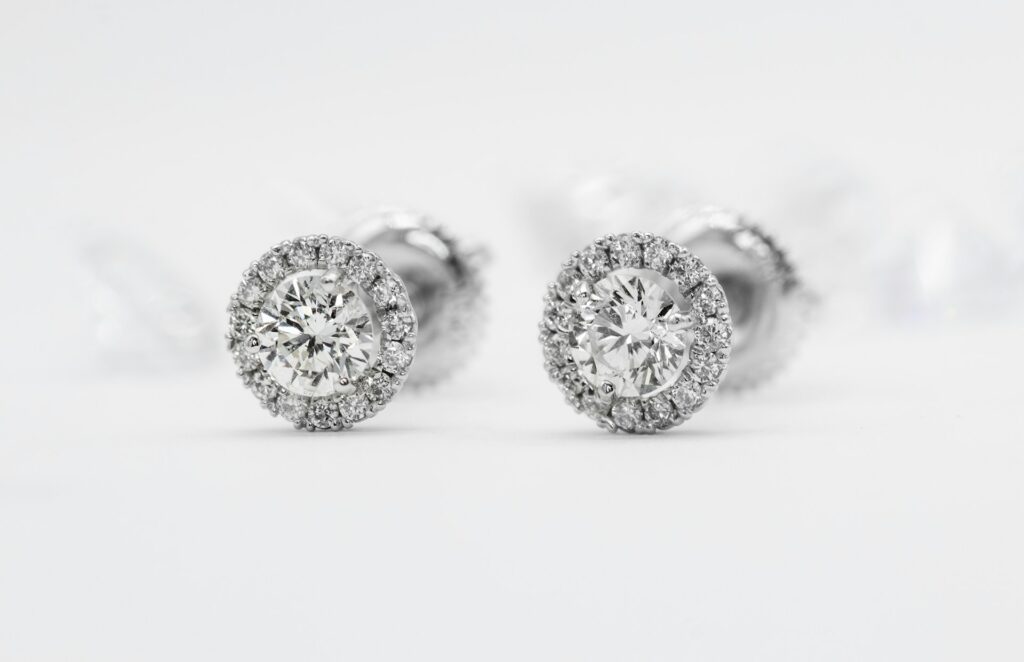



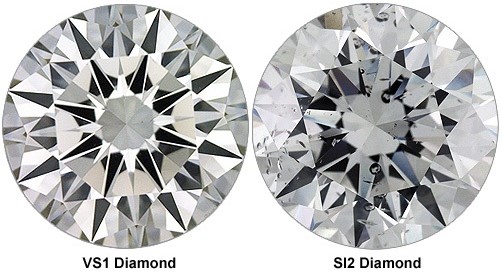


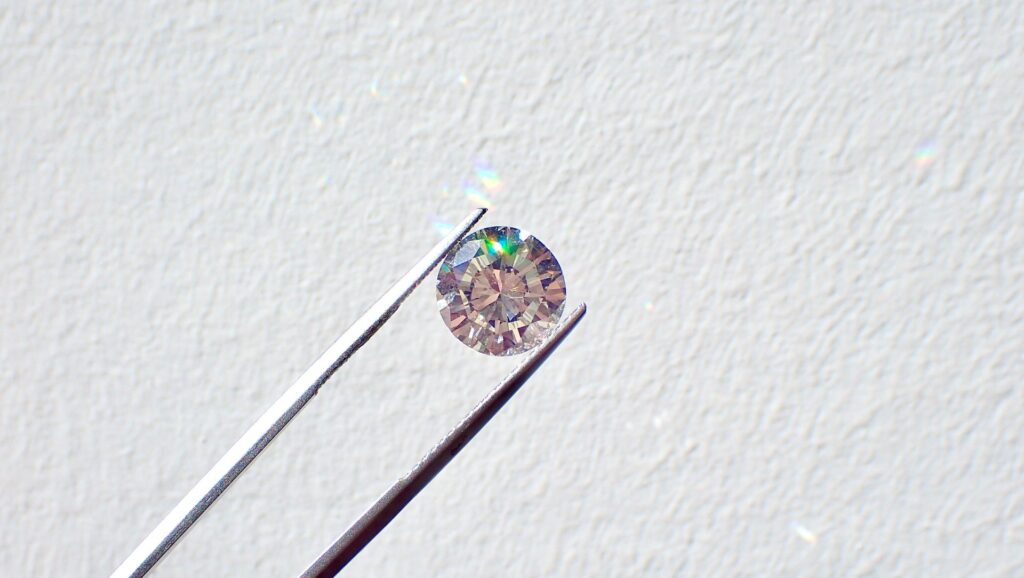
When choosing a diamond, clarity plays a significant role in determining the stone’s beauty, brilliance, and value. The Gemological Institute of America (GIA) clarity scale is the most widely recognized grading system used to assess the internal and external imperfections of a diamond, known as inclusions and blemishes. At Delows, we’re proud to offer a wide selection of high quality, stylish, and affordable diamonds—both natural and lab grown—helping you make an informed choice whether you’re shopping for a ring, necklace, or bracelet.
The GIA clarity scale consists of 11 distinct grades:
Flawless (FL)
Internally Flawless (IF)
Very Very Slightly Included 1 (VVS1)
Very Very Slightly Included 2 (VVS2)
Very Slightly Included 1 (VS1)
Very Slightly Included 2 (VS2)
Slightly Included 1 (SI1)
Slightly Included 2 (SI2)
Included 1 (I1)
Included 2 (I2)
Included 3 (I3)
These 11 clarity grades fall under six broader categories:
Flawless (FL)
Internally Flawless (IF)
Very Very Slightly Included (VVS1 & VVS2)
Very Slightly Included (VS1 & VS2)
Slightly Included (SI1 & SI2)
Included (I1, I2 & I3)
Each category reflects the visibility, number, and location of inclusions or blemishes under 10x magnification.
The highest clarity grade is Flawless (FL), which means the diamond has no inclusions or blemishes visible under 10x magnification. While this grade represents the pinnacle of diamond clarity, it is extremely rare and expensive. For many buyers, clarity grades in the VS1–SI1 range offer the best balance of visual beauty and affordability.
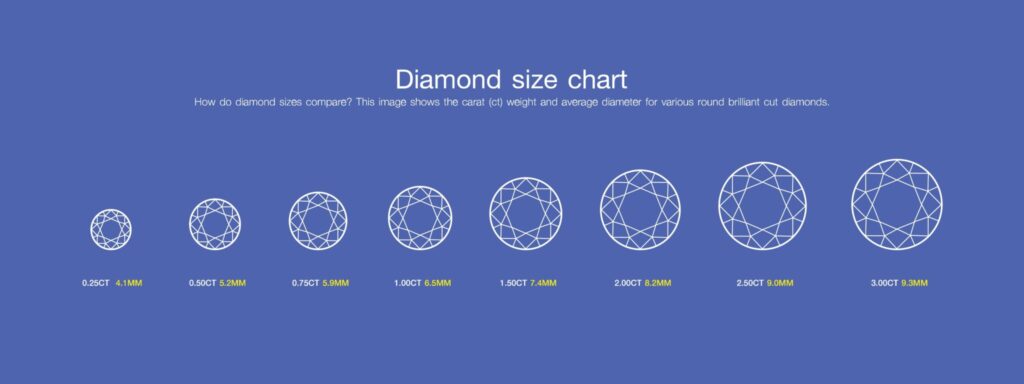
In the context of diamonds, the correct term is Carat (ct), not Karat, which is used to measure the purity of gold. Carat measures the weight of a diamond. It’s important not to confuse the two when purchasing precious stones.
FL (Flawless): No internal or external flaws under 10x magnification.
IF (Internally Flawless): No internal flaws, only minor surface blemishes.
VVS1 and VVS2: Contain minute inclusions that are extremely difficult to detect under 10x magnification. VVS1 is slightly higher in clarity than VVS2.
These grades reflect extremely high quality and are often chosen for prestigious or heirloom jewelry.
VS1 and VS2: Inclusions are minor and difficult to see under magnification. Great for engagement rings and necklaces.
SI1 and SI2: Inclusions are noticeable under magnification, but usually not to the naked eye. SI1 can offer excellent value.
These clarity grades are where most buyers find the sweet spot for affordable diamonds that still appear beautiful.
These grades represent diamonds with inclusions visible to the naked eye:
I1: May still be used in lower-priced or accent jewelry.
I2 & I3: Have prominent inclusions that can affect durability and brilliance. Generally not recommended for center stones in high-end pieces.
The VS2–SI1 range is often referred to as the “holy grail” for shoppers who want maximum value without sacrificing too much on clarity. These diamonds typically look eye-clean (free of visible inclusions) but cost significantly less than higher clarity stones. They’re perfect for those looking for stylish, high quality, and affordable jewelry without breaking the bank.
When evaluating a diamond’s clarity, gemologists look at:
Size – Larger inclusions have greater impact.
Number – More inclusions reduce clarity.
Position – Inclusions near the center are more visible.
Nature – Type of inclusion (feather, cloud, crystal, etc.)
Color or Relief – How noticeable the inclusion is.
If you’d like to learn more about Diamond Cuts, Clarity, Carat, and Color, click here.
Inclusion sizes range from microscopic pinpoints to large crystals. In higher clarity grades like VS1 or VVS1, inclusions are tiny and require magnification to see. In lower grades like I2 or I3, inclusions may be visible to the naked eye and can affect the structural integrity of the diamond.
Feathers – Small cracks within the diamond.
Clouds – Groups of pinpoints that give a hazy appearance.
Crystals/Minerals – Tiny minerals trapped inside.
Needles – Long, thin lines.
Graining – Internal lines caused by irregular crystal growth.
Understanding the type of inclusion helps determine how it affects a diamond’s appearance and value.
Inclusions are often found near the center (table) or edges (girdle) of a diamond. Central inclusions are more visible and reduce clarity grade more than those near the edge, which can sometimes be hidden under prongs in a ring setting.
Most inclusions are white or transparent, but some can be black, grey, or even colored, depending on the type of mineral present. Colored inclusions are more noticeable and can decrease the perceived clarity and beauty of the diamond.
In general, diamond inclusions are stable and don’t get worse over time. However, diamonds with feathers or large surface-reaching inclusions may be more prone to chipping if exposed to impact. Choosing a protective setting and handling your jewelry with care can mitigate these risks.
SI1 and VS2 grades offer the best value in terms of visual appearance and cost. These diamonds often appear flawless to the naked eye but are priced much lower than VVS or FL stones. At Delows, we specialize in sourcing beautiful, high quality diamonds that deliver both prestige and affordability.
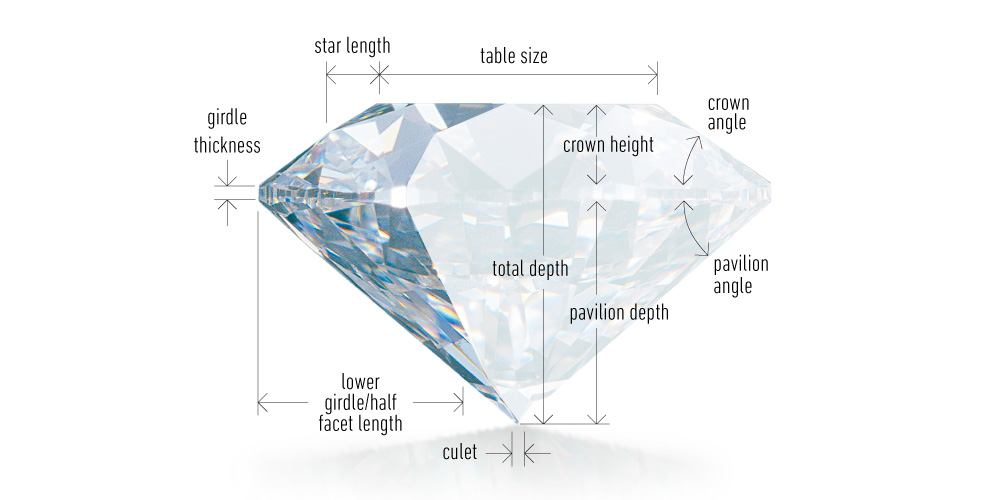
Understanding a diamond’s anatomy helps in evaluating clarity:
Table – The large, flat top surface
Crown – The upper portion above the girdle
Girdle – The outer edge or perimeter
Pavilion – The bottom part below the girdle
Culet – The tiny point at the base (sometimes faceted)
Inclusions can appear anywhere, but their location greatly affects the diamond’s visual appeal.
Clarity is a critical part of the diamond grading scale and greatly influences a diamond’s appearance and price. Whether you’re considering a natural diamond or lab grown option, understanding the GIA clarity scale helps you make a smart, informed choice. Delows is committed to offering affordable diamonds in a variety of clarity grades—each selected for beauty, brilliance, and value. Whether it’s a ring, bracelet, or necklace, you can trust Delows to deliver stylish, high quality jewelry that celebrates life’s most beautiful moments.
Page updated last: June 27, 2025


contact@delows.com
Below is our size guide chart:
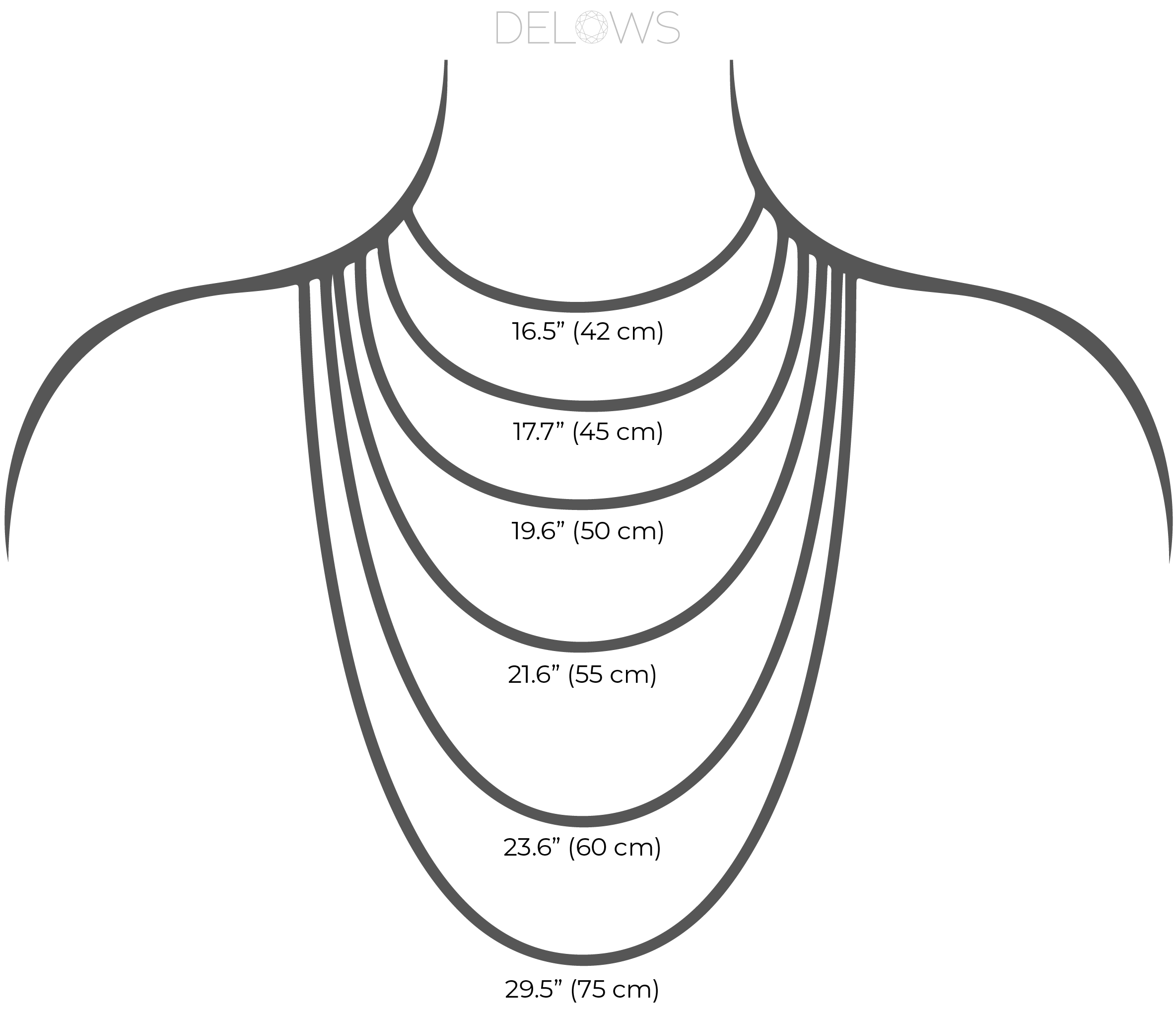
Europe and US size comparison
Requests for customer information
Per our Privacy Policy and Terms of Service, Delows does not release non-public information about our customers unless it is lawfully requested (for example, via subpoena, court order, or search warrant). When presented with an official legal request, we will disclose specifically requested information so long as we are reasonably able to locate and retrieve it.
If you are a member of law enforcement or another government agency and wish to request specific customer information via an official legal process, please provide as much information as possible to help us identify the relevant account(s) and/or transaction(s) in question. We are unable to process overly broad or vague requests.
Any official legal request should also include the following information so that we can verify its origin:
Law enforcement and other government agencies may submit requests through the following channels:
Email: us-compliance@Delows.com
Physical Mail: Delows, 46-E Peninsula Center, Unit 444, Rolling Hills Estates, CA, 90274, USA
Please note that acceptance of legal process via these channels is for convenience and does not waive any objections including, but not limited to, lack of jurisdiction, lack of verification of subpoena, or proper service. Requests submitted through email will result in a faster response, as mail may cause delays.
Subpoena processing may be subject to a $35 per hour fee.
Delows will not respond to correspondence sent by non–law enforcement/government agencies, or individuals to the addresses above.
What is Delows?
How long will it take to receive records in response to my legal process?
Turnaround time for properly formatted and signed requests is approximately 10 business days.
We strive to provide a safe, secure, and fun marketplace for buyers and sellers. If a transaction goes sour, someone is attempting to deceive others, or if you notice any Prohibited Products or Prohibited Behavior , just send us an email or a message via the in-app Help Center and we’d be happy to help.
Online safety:
Financial safety:
Updated: 01/01/2023
Delows respects the intellectual property rights of its Users and we comply with the provisions of the Digital Millennium Copyright Act (“DMCA”) (17 U.S.C. §512 et. al., as amended). It is our policy to respond promptly to any claim that content posted on our App or through our Services infringes copyrighted or other intellectual property. Delows will use reasonable methods to investigate notices of alleged infringement and will take appropriate action under applicable laws. To notify Delows of a possible infringement, you must submit a written notice to our Designated Copyright Agent using the following address, email or web form: Delows, Attn: Designated Copyright Officer 46-E Peninsula Center, Unit 444, Rolling Hills Estates, CA 90274 Email us at: dmca@Delows.com You may also use our form. Any notice of possible copyright infringement must include the following information:
(1) an electronic or physical signature of the owner or person authorized to act on behalf of the owner of the copyrighted or intellectual property;
(2) a description of the copyright-protected work or other intellectual property that you allege has been infringed;
(3) a description of the material that you claim is infringing and where it is located on the App or Service;
(4) your contact information, including at a minimum your mailing address, telephone number, and email address;
(5) a statement by you that you have a good faith belief that the use of the materials on the App or Service is not authorized by the copyright owner, its agent, or the law; and
(6) a statement by you that the information in your notice is accurate, and that, under penalty of perjury, you are the copyright or intellectual property owner or authorized to act on the copyright or intellectual property owner’s behalf.
If you believe that a DMCA Notice has been submitted in error, and that your posting was not infringing, you may contact our Designated Copyright Agent at the contact information provided above to submit a written counter-notification. Under the DMCA, a counter-notice must include the following information:
(1) your physical or electronic signature;
(2) an identification of the material that was removed and the location at which the material appeared before it was removed;
(3) a statement under penalty of perjury that you have a good faith belief that the material was removed as a result of mistake or misidentification of the material (whether or not it was intentional);
(4) your contact information, including at a minimum your mailing address, telephone number, and email address; and
(5) a statement that you consent to the jurisdiction of Federal District Court for the judicial district in which the address you provided is located (or, if you live outside the United States, the U.S. District Court for the Northern District of California) and that you will accept service of process from the person who provided the DMCA Notice or an agent of such person.
This policy describes how Delows delivers communication to you electronically. We may amend this policy at any time by posting a revised version on our website. The revised version will be effective at the time we posted.
You agree and consent to receive electronically all communication, agreements, documents, notices and disclosures (collectively, “Communications”) that we provide in connection with your Delows account (“Account”) and your use of our Services where legally permissible. Communications include:
We will provide these Communications to you by posting them on the Delows website, by adding to your account notifications and/or by emailing them to you at the primary email address listed in your Delows profile.
Updating your contact information
It is your responsibility to keep your primary email address up to date so that Delows can communicate with you electronically. You understand and agree that if Delows sends you an electronic Communication but you do not receive it because your primary email address on file is incorrect, out of date, blocked by your service provider, or you are otherwise unable to receive electronic Communications, Delows will be deemed to have provided the Communication to you. Please note that if you use a spam filter that blocks or re-routes emails from senders not listed in your email address book, you must add Delows to your email address book so that you will be able to receive the Communications we send to you. You can update your primary email address or street address at any time by logging into the Delows app, going to “My profile”, and selecting the “Settings” tab. If your email address becomes invalid such that electronic Communications sent to you by Delows are returned, Delows may deem your Account to be inactive, and you will not be able to transact any activity using your Delows Account until we receive a valid, working primary email address from you.
Hardware and software requirements
In order to access and retain electronic Communications, you will need the following computer hardware and software:
We will notify you if there are any material changes to the hardware or software needed to receive electronic Communications from Delows. By giving your consent you are confirming that you have access to the necessary equipment and are able to receive, open, and print or download a copy of any Communications for your records. You may print or save a copy of these Communications for your records as they may not be accessible online at a later date.
Consent requirements
We will continue to send paper copies of documents through U.S. Postal Service where required by law or regulation. Separate consent will be required to receive electronic tax statements.
You may withdraw your consent to receive some Communications electronically by writing to us at Attn: Compliance Electronic Communications Delivery Policy, 46-E Peninsula Center, Unit 444, Rolling Hills Estates, CA 90274 or by contacting us via the “Contact Us” page or links on Help Center page on the Delows App and website.
Requesting paper copies of electronic communications
If, after you consent to receive Communications electronically, you would like a paper copy of a Communication we previously sent you, you may request a copy within 180 days of the date we provided the Communication to you by contacting us as described above. We will send your paper copy to you by U.S. mail. In order for us to send you paper copies, you must have a current street address on file address in your Delows user profile. If you request paper copies, you understand and agree that Delows may charge you a Records Request Fee for each Communication.
Updated: 01/01/2023
Delows prohibits the listing or sale of any item that is set forth in the list of Prohibited Products. If a Seller lists a prohibited item, it will be deemed to be a violation of our Terms of Use regardless of whether the Seller acted intentionally or not. If Delows determines that a listing is in violation or is otherwise inappropriate Delows may, at its discretion, remove the listing and cancel any related transactions up to and including termination or suspension.
Delows may not be used in connection with any product, service, transaction or activity that in general:
The list of Prohibited Products may be updated from time to time at Delows’s discretion. Examples of items that fall under certain categories may also be expanded to provide better communication and context to our users.
Delows may not be used to sell any of the following products or services:
Note: Any item may be removed at the discretion of the company.
Updated: 01/01/2023
Delows may not be used in connection with any product, service, transaction or activity that in general:
Delows has developed our Prohibited Behavior Policy to prevent any abuse as outlined above and to protect our users from conduct that may cause harm to their experience of using Delows or abuse any features of our Service.
By using our Service, you agree to follow the rules and manners as included in our Help Center articles and in our Terms of Use and Policies. By using our Service, you agree not to engage in the following Prohibited Behavior:
Delows may take any of the following actions on an account that has violated our Policies or if Delows suspects Prohibited Behavior has occurred:
We may update our list of Prohibited Behavior from time to time. The following is a list of actions Delows restricts users from participating in:
Transactions:
Accounts:
Listings:
Solicitations:
Other:
Do not hesitate to contact Delows if you come across or are solicited for such actions.
Updated 1/23/2023